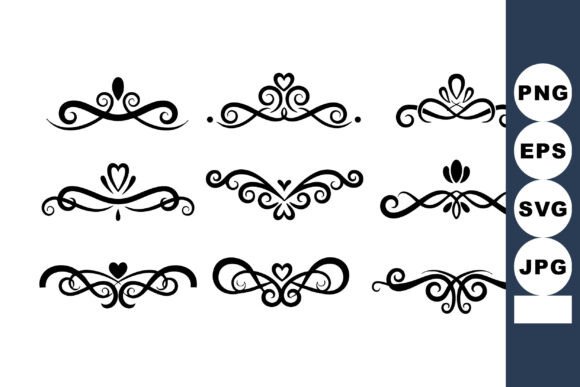
Decorative Black Ornamental Vector Flour for Graphics and Illustrations
Aesthetic First Impressions
The first glance at Decorative Black Ornamental Vector Flour immediately sets a tone of elegance and sophistication. The set of nine vector flourishes, featuring heart motifs and swirls, exudes a classic and stylish mood that feels both timeless and versatile. Each element is meticulously crafted with a clean, bold line work that suggests a hand-drawn aesthetic, yet maintains the precision of digital illustration. This balance makes it an ideal asset for designers seeking to infuse vintage charm into modern projects.
Design Context and Project Fit
Imagine working on a branding project for a small handmade business specializing in vintage-inspired stationery and paper goods. The client wants to evoke a sense of nostalgia and craftsmanship through their visual identity. In this scenario, Decorative Black Ornamental Vector Flour could serve as a key component in creating invitations, packaging, and social media graphics that align with the brand’s aesthetic. Its ornamental nature lends itself well to decorative borders, logo embellishments, and product labels, helping to unify the visual language across all touchpoints.
Applying in Real Design Situations
Decorative Black Ornamental Vector Flour performs exceptionally well in a variety of design contexts. For instance, in logo design, these flourishes can be used as subtle accents or integrated into the main emblem to add character. When applied to packaging design, they can enhance the visual appeal of product boxes and tags without overwhelming the primary branding elements. In social media graphics, they offer a way to add visual interest to posts, banners, and Canva templates, making content feel more engaging and cohesive.
For printable designs, such as sticker design or product mockups, the vector format ensures scalability and clarity, even when printed at various sizes. These flourishes also work well in editorial design, where they can be used to decorate page edges, headers, or as part of a themed layout. Their versatility extends to Cricut projects, where they can be cut out and used as embellishments for cards, scrapbooks, and other DIY crafts.
Where It Works Best
- Large layout areas: Perfect for hero graphics, posters, and website banners where the flourish can stand out without competing with text.
- Product mockups: Ideal for adding visual depth and texture to digital products like mugs, tote bags, and t-shirts.
- Themed collections: Especially useful in seasonal campaigns, local events, or Etsy shop themes that require consistent, elegant visuals.
- Print-on-demand: Offers flexibility for designers creating commercial design assets that can be sold across multiple platforms.
Where to Use with Caution
While Decorative Black Ornamental Vector Flour is a powerful tool, it should be used judiciously in certain contexts. In small sizes, the intricate details may become lost, reducing their impact. On crowded layouts, they can compete with other design elements, leading to visual clutter. Similarly, in low-contrast designs or minimalist branding, the flourishes might disrupt the intended simplicity. For professional corporate materials, where a clean and modern look is essential, these elements could be too ornate or outdated.
Impact on Design Quality
When used thoughtfully, Decorative Black Ornamental Vector Flour can significantly enhance the visual trust and brand recognition of a design project. It adds a layer of emotional appeal that resonates with audiences who appreciate vintage and handmade aesthetics. However, its influence on readability and visual hierarchy must be carefully managed. Placing these flourishes in the right context—such as as decorative accents rather than primary visual elements—helps maintain a balanced and professional look.
Designer Notes for Commercial Use
Before using Decorative Black Ornamental Vector Flour in a client project, there are several practical considerations to keep in mind. First, test the asset in black and white to ensure it remains visually appealing and legible in monochrome formats. Check how it performs on both light and dark backgrounds to avoid contrast issues. Preview it at small and large sizes to confirm its adaptability across different applications.
Place it on real mockups to see how it integrates with the overall design. Test print quality by checking if the vector details remain crisp and clear when printed. Review file formats, especially if PNG transparency is included, to ensure compatibility with various design software. If SVG or vector editability is relevant, verify that the files are editable and scalable without loss of quality.
Finally, always confirm the commercial license before using the asset for a client or business project. Ensuring proper licensing is crucial for maintaining legal compliance and protecting both the designer and the client.